The Power of Being and Doing – Grief Support without Words
National Grief Awareness Week
When we think about supporting someone who is grieving—or even about tending to our own grief—we often picture heartfelt conversations, meaningful advice, or finding the ‘right’ words to say. For many people, the pressure to support through speaking can feel overwhelming and intimidating because, for many, grief is not a comfortable topic to talk about. Sometimes, words can feel too heavy, too complicated, or simply out of reach.
One of the aims of this year’s National Grief Awareness Week (January 26–February 1) is to highlight an important truth: grief awareness and grief support can be demonstrated and expressed without words.
The Trouble with Talking
Although talking is one way to offer support towards the grief that someone is experiencing, some people feel overwhelmed by the idea of talking about grief and loss. Cultural expectations, personal history, and language differences are just a few factors that can also make verbal expression challenging.
The pressure to talk, or ‘open up’, can sometimes add another layer of stress to an already painful experience.
Saying the Right Thing with Silence
Some people avoid reaching out to someone who is grieving because they worry about saying the wrong thing. Others feel uncomfortable talking about grief, especially if it brings up their own fears, losses, or vulnerabilities. This can lead to isolation – not because people don’t care, but because they don’t know what to say and are worried that saying the ‘wrong’ thing might make a painful situation even worse for someone who is grieving.
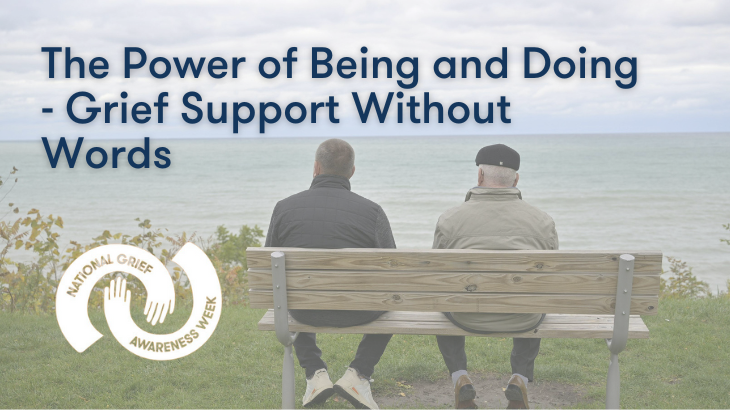
However, for many people, support does not begin or end with conversation. In fact, some of the most meaningful support can be offered without a single word being spoken. Recognising this helps us to understand that a quiet presence can be just as meaningful as conversation in offering solace and showing care.
Active Grief Support
Grief can be supported through simple actions directed towards someone who is grieving like making them a cup of tea, helping them to finishing a DIY project, sending them text message, or inviting them to go for a walk. All of these actions and so many more communicate something powerful: You are not alone.
Being present with someone when times are difficult is a way of showing them that we care. That we want to be there for them when things are hard, and that we will stay being there for them when we’re uncertain about how to show support when times are tough. Being with someone in their grief—without trying to fix it, explain it, or rush it—can be deeply supportive. It allows space for whatever is there: silence, tears, anger, numbness, or even moments of laughter.
Grief and Bereavement Resources
- Bereavement Support Line: Our national freephone service for people to speak about their grief or ask questions relating to the death of someone they cared about. Anyone concerned about or working with someone who is grieving can call for information and guidance. Available on freephone 1800 80 70 77, Monday to Friday, 10 am to 1 pm.
- Bereavement and Loss Hub: A range of information, advice and resources on grief and loss.
- Irish Childhood Bereavement Network: The ICBN, hosted by Irish Hospice Foundation, works with its members to advocate for bereaved children and young people, and offers information and resources on supporting a bereaved child.
- Rosabel’s Rooms: Rosabel’s Rooms is a child loss project, in partnership with Irish Hospice Foundation, offering financial and therapeutic supports to bereaved parents and families across Ireland through Rosabel’s Room to Heal Fund and Rosabel’s Room to Talk Fund.
National Grief Awareness Week is important. It helps people realise that grief is a natural, personal response to loss and that it’s okay to feel all kinds of emotions. It also helps break down the stigma around grief, encouraging more open conversations and better support. When we understand grief better, we can offer more empathy and practical help to those who are grieving.
When more people understand grief, it creates more compassionate communities. People are more likely to show patience, kindness, and understanding when they know that everyone experiences grief differently, and that healing takes time. By raising awareness, we can make sure those who are grieving feel supported, understood, and less alone.
If you know someone who has been bereaved over the last year or two drop them a text, let them know if you have a nice memory of the person who died, check in and see how they are doing.


